Venous diseases can include:
Chronic venous insufficiency
When valves in the veins that prevent blood from flowing backwards become weakened or damaged, allowing blood to pool in the veins instead of circulating efficiently, this is known as chronic venous insufficiency (CVI). This condition can result in swelling, aching or cramping in the legs or ankles.
Deep vein thrombosis (DVT)
When a blood clot forms in a deep vein (usually in the legs), it can partially or completely block the flow of blood through the vein. This is called deep vein thrombosis, and can cause swelling in the affected leg, pain, discoloration on the skin or leg heaviness or cramping.
May Thurner Syndrome
When the right iliac artery compresses the left iliac vein in the pelvis, the flow of blood back to the heart slows down. This condition, known as May Thurner Syndrome, doesn’t always cause symptoms but swelling, leg pain or heaviness, varicose veins, skin discoloration and recurrent DVTs (usually on the left side) can occur.
Varicose veins
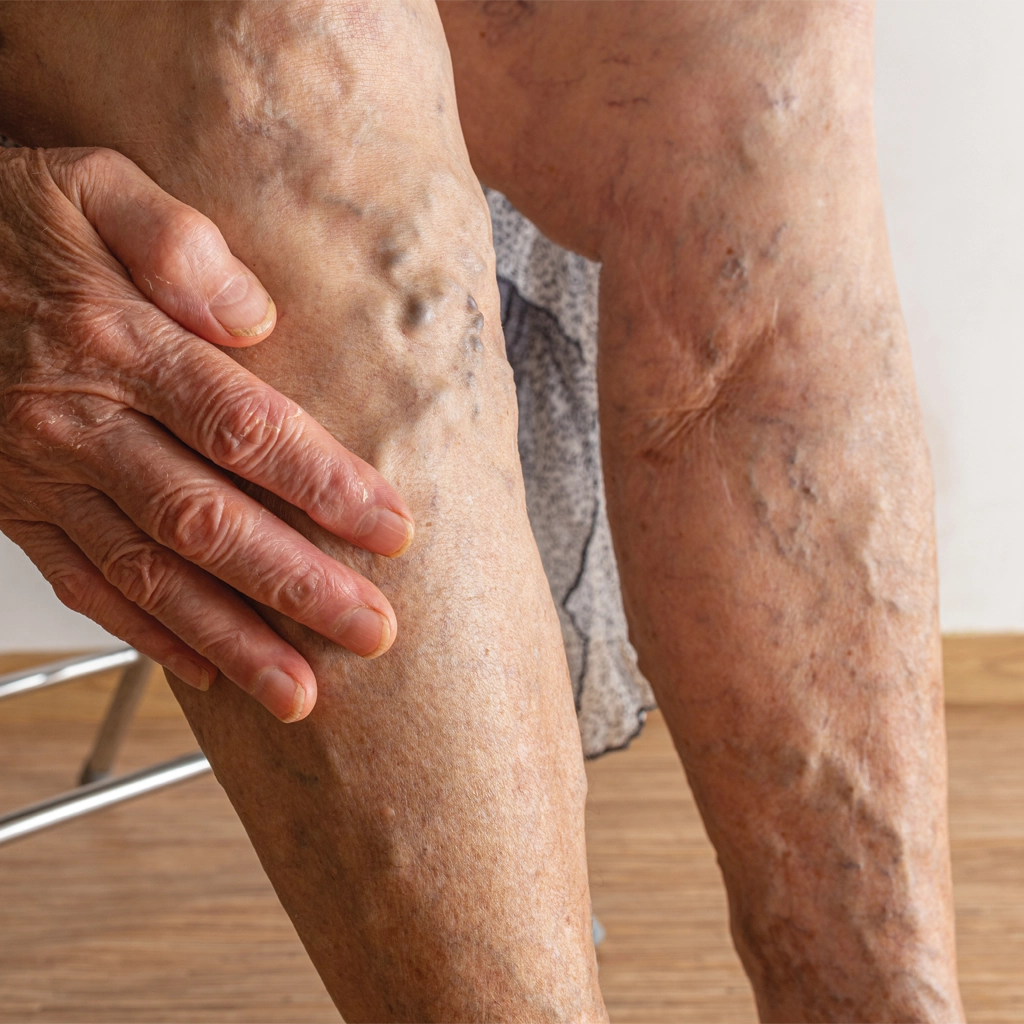
Varicose veins are enlarged, twisted veins that typically appear just under the skin, and most commonly in the legs. They are caused by venous insufficiency, which develops when vein valves weaken or fail and allow blood to pool in the legs instead of flow back to the heart and lungs. In addition to being unsightly, they can cause swelling, aching or cramping in the legs and ankles.
What causes venous disease?
The underlying issues that cause venous disease are typically damaged or weakened vein valves, obstructed blood flow and increased pressure inside the veins. Risk factors for venous disease include aging, family history, hormones, smoking, prolonged standing or sitting, being overweight, previous surgery or injury and pregnancy.