Uterine Fibroids

Symptoms | Diagnosis | Treatment

What are uterine fibroids?

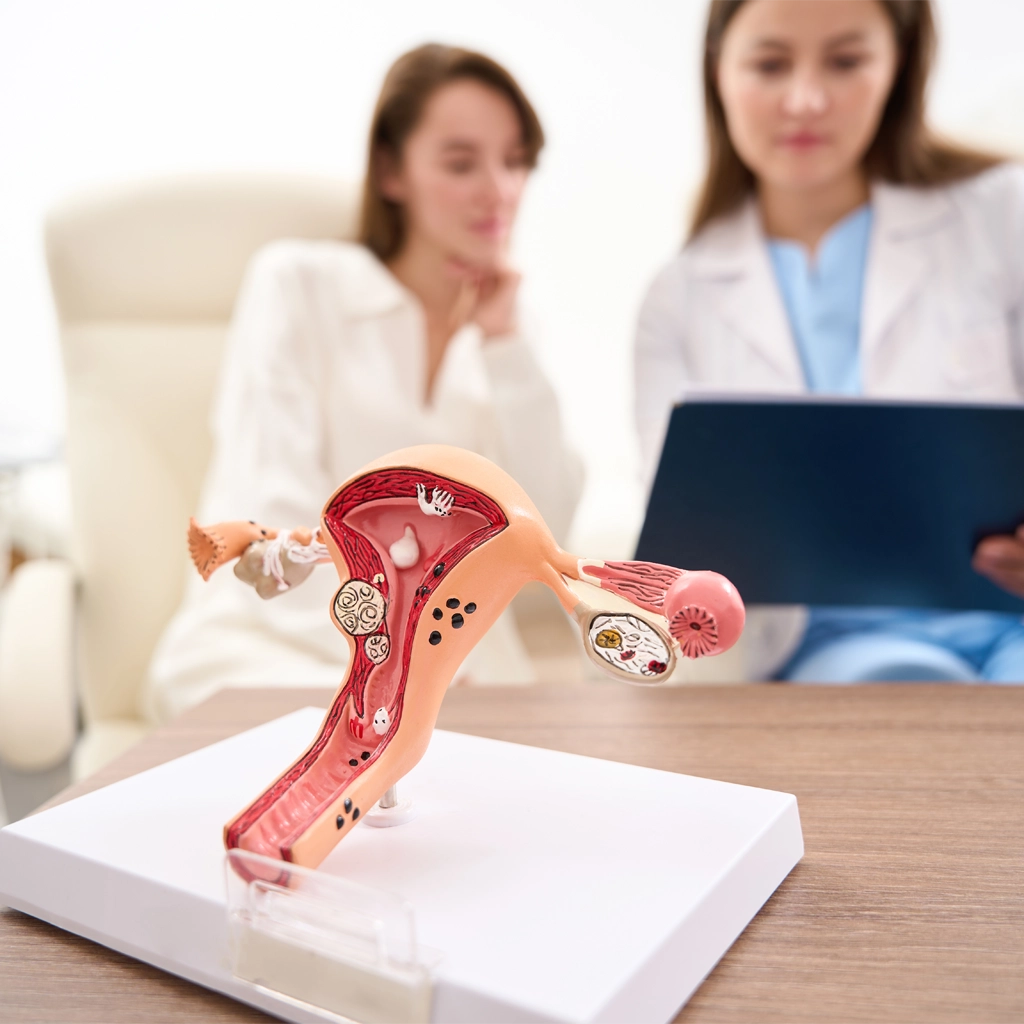
Also known as leiomyomas, uterine fibroids are non-cancerous growths that develop in or around the uterus. They are comprised of muscle and fibrous tissue and can be as small as a seed or as large as a melon. A woman can have a single fibroid or many fibroids. The types of fibroids include:

  • Intramural – The most common type, they grow within the uterine wall
  • Subserosal – They grow on the outer surface of the uterus
  • Submucosal – These grow inside the uterine cavity
  • Pedunculated – Attached by a thin stalk to the uterus
uterine fibroids

What causes uterine fibroids?

The exact cause of fibroids developing is not known, but risk factors include hormones (especially estrogen and progesterone which can stimulate their growth), family history of fibroids, age (30s to 40s), and ethnicity (African American women are at a higher risk). They can grow large during a pregnancy, and they often shrink after menopause. Other risk factors include being overweight, high blood pressure, low vitamin D levels, diet and alcohol use.

What are the symptoms of uterine fibroids?

While many women have no symptoms at all, some may experience:

  • Heavy or prolonged menstrual bleeding
  • Pelvic pain or pressure
  • Frequent urination or constipation
  • Pain during intercourse
  • Enlarged abdomen/bloating
  • Difficulty getting pregnant

The symptoms of fibroids are similar to other conditions, such as adenomyosis, ovarian cysts, endometrial polyps and certain types of rare uterine cancers. Therefore, it is important to have a proper diagnosis to ensure proper treatment.

How are uterine fibroids diagnosed?

Uterine fibroids may be felt by your healthcare provider during a pelvic exam. In addition, imaging tests such as ultrasound and MRI may be used to confirm a diagnosis, rule out other conditions, or to measure the size, number and location of fibroids. In some cases, a hysteroscope (a tiny camera inserted through the cervix) may be used.

Treatment for uterine fibroids

Your treatment options for uterine fibroids will depend on the fibroid size and location, your symptoms, your age and proximity to menopause, your overall health and whether or not you wish to become pregnant. Also, if the fibroids are small and not causing any symptoms, no treatment may be required. For women with symptomatic fibroids, the following treatment options are available:

Medication

For some women, hormonal birth control can alleviate heavy bleeding and pain. Newer medications called GnRH antagonists are also used to reduce heavy bleeding while preserving some hormone production.

Surgery

Hysterectomy (removal of the uterus) and myomectomy (surgical removal of fibroids from within the uterus) are two surgical options available to women. With hysterectomy, pregnancy is no longer possible. With myomectomy, pregnancy is possible but there is a high likelihood that the fibroids will return within 24 months.

Radiofrequency ablation (RFA)

RFA uses heat generated by radiofrequency energy to partially shrink fibroids. This approach has shown to be less effective for women with larger fibroids, multiple fibroids, certain submucosal fibroids and fibroids in difficult locations. In addition, fibroids may return requiring repeat procedures.

Uterine fibroid embolization (UFE)

This treatment option, performed by the doctors at Pacific Vascular Access Care, is a proven and minimally invasive approach to treat fibroids. Using imaging to guide the procedure, a doctor inserts a tiny catheter into the bloodstream and advances it to the arteries that supply blood to the fibroid(s). Tiny particles are injected into the artery, which become lodged in smaller blood vessels, cutting off the blood supply to the fibroid. Without a blood supply, the fibroids shrink and symptoms are relieved. The results are lasting, and fibroids of any size and number can be treated with UFE.
How can we help you?

At Pacific Vascular Access Care, we understand how the pain and inconvenience of fibroids can impact your life and happiness. We are a trusted provider of minimally invasive, outpatient vascular and interventional care and have extensive experience performing the UFE procedure, which is now recommended by the American College of Obstetricians and Gynecologists (ACOG). We are committed to offering effective, non-surgical treatment options designed to restore your health and well-being.