Peripheral Artery Disease
Symptoms | Diagnosis | Treatment
What is peripheral artery disease?
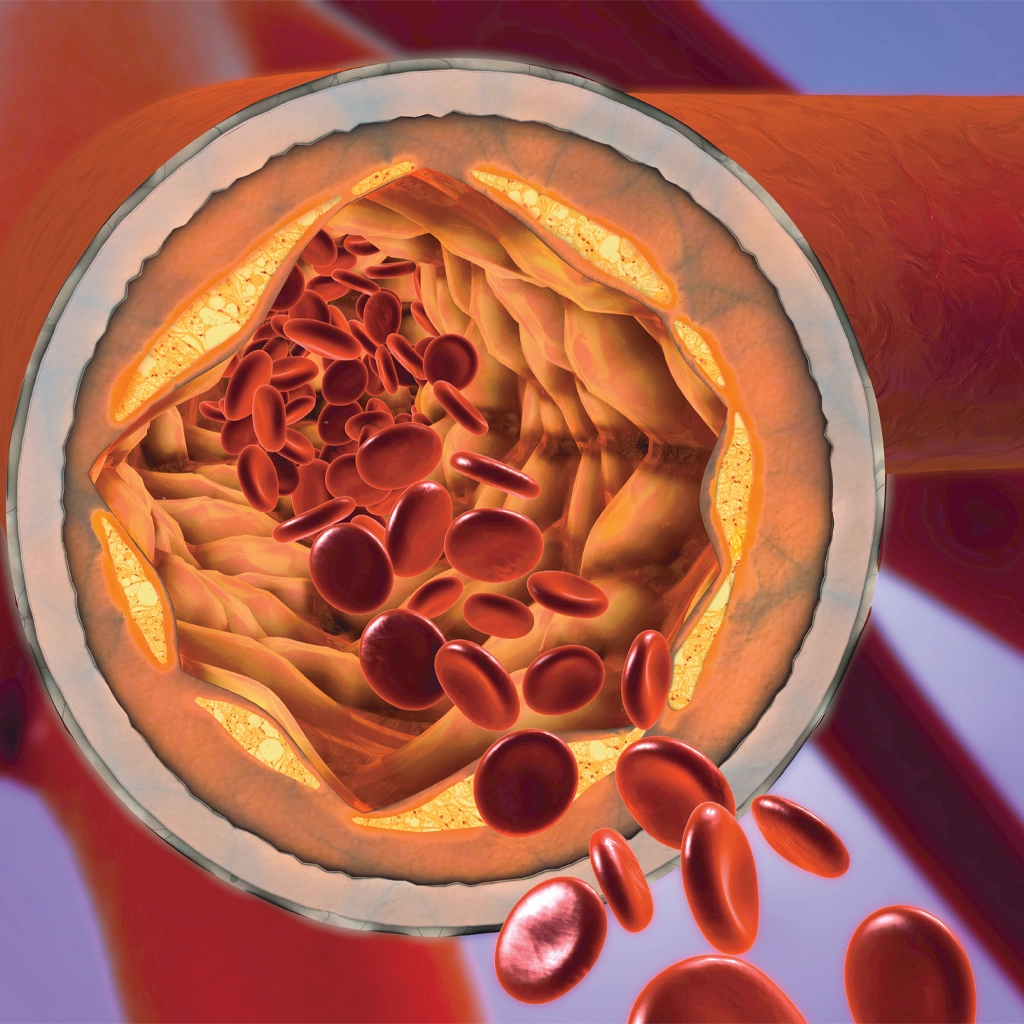
Peripheral artery disease (PAD) occurs when fatty deposits, known as plaque, accumulate in the arteries that supply blood from the heart to the legs and feet. This buildup causes the arteries to narrow, limiting blood flow and resulting in symptoms such as pain, cramping, and trouble walking.
What causes PAD?
PAD is most commonly the result of atherosclerosis, which can occur as a result of family history (genetic risk), smoking, diabetes, high blood pressure, high cholesterol, being overweight. Being over the age of 50 also increases risk.